 Partner with Us
  Referring Provider Portal
  Patients: Request Appointment
  Contact Us


LASIK Eye Surgery
LASIK is a safe, FDA-approved laser procedure that permanently corrects nearsightedness, farsightedness, and astigmatism, typically in under 15 minutes for both eyes.
 AVP•SEES offers bladeless, wavefront-guided LASIK at 80+ locations across Virginia, Tennessee, and Alabama, with most patients achieving 20/20 vision or better and more than 95% reporting satisfaction with their results.
What Is LASIK?
LASIK, which stands for Laser-Assisted In Situ Keratomileusis, is a refractive eye surgery that permanently reshapes the cornea, the clear front surface of the eye, to correct the way light focuses on the retina. When light does not focus precisely on the retina, the result is blurry vision, known clinically as a refractive error.
LASIK corrects three of the most common refractive errors:

- Myopia (nearsightedness): Objects up close are clear, but distance vision is blurry.
- Hyperopia (farsightedness): Distance vision may be clearer, but near tasks like reading are difficult.
- Astigmatism: An irregularly shaped cornea causes blurred vision at all distances.
LASIK has been performed for more than 30 years and is one of the most studied elective procedures in medicine. A landmark global review published in Ophthalmology analyzed outcomes across the world literature and found that an average of
 Trusted Source
LASIK world literature review: quality of life and patient satisfaction
Solomon KD et al
Go to Source
95.4% of LASIK
patients are satisfied with their results. The FDA has formally
Trusted Source
SUMMARY OF SAFETY AND EFFECTIVENESS DATA (SSED)
U.S. Food and Drug Administration
Go to Source
approved LASIK
for the treatment of myopia, hyperopia, and astigmatism within defined parameters, making it one of the most rigorously reviewed elective procedures available.
Trusted Source
LASIK world literature review: quality of life and patient satisfaction
Solomon KD et al
Go to Source
95.4% of LASIK
patients are satisfied with their results. The FDA has formally
Trusted Source
SUMMARY OF SAFETY AND EFFECTIVENESS DATA (SSED)
U.S. Food and Drug Administration
Go to Source
approved LASIK
for the treatment of myopia, hyperopia, and astigmatism within defined parameters, making it one of the most rigorously reviewed elective procedures available.
How Bladeless LASIK Works at AVP•SEES
Not all LASIK is the same. At AVP•SEES, we use bladeless, femtosecond laser technology combined with wavefront-guided custom mapping to deliver a procedure precisely tailored to the unique structure of your eye.
Here is how the process works:
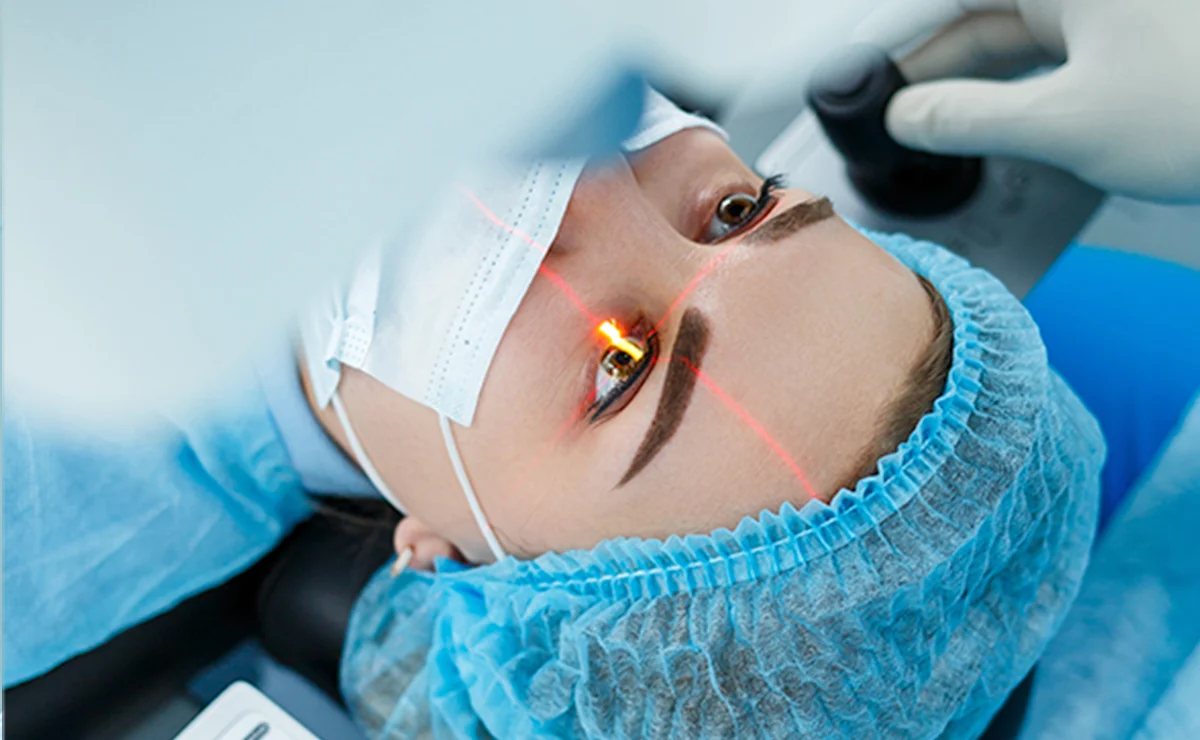
Step 1: Custom Eye Mapping
Before your procedure, your eyes are mapped with advanced wavefront diagnostic technology. This creates a detailed, three-dimensional blueprint of your eye’s unique optical imperfections, subtle irregularities beyond what a standard glasses prescription accounts for, that allow your surgeon to customize the laser treatment specifically to your eye.
Step 2: Femtosecond Laser Flap Creation
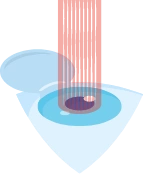
Instead of a metal blade, a femtosecond laser creates a thin, precise corneal flap measured in microns. Bladeless flap creation offers greater precision and reproducibility compared to mechanical microkeratome techniques and is the current standard of care at our practice.
Step 3: Excimer Laser Reshaping
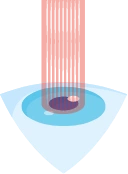
With the flap gently lifted, a second laser, the excimer laser, removes microscopic amounts of corneal tissue according to your custom map. This reshaping corrects how light bends as it enters the eye. The laser treatment itself typically takes less than 60 seconds per eye.
Step 4: Flap Repositioning
The flap is repositioned without sutures. It adheres naturally within minutes, and the healing process begins immediately.
The full procedure for both eyes is usually completed in under 15 minutes. Most patients notice dramatically improved vision within 24 hours.
A 2024 systematic review and
Trusted Source
PMC
Clinical outcomes of LASIK and PRK in hyperopic refractive errors
Go to Source
meta-analysis
confirmed that LASIK and surface-based alternatives like PRK deliver comparable long-term visual acuity outcomes, while LASIK offers faster visual recovery, making it the preferred option for most candidates seeking minimal downtime.
LASIK vs. Other Vision Correction Options
Choosing the right procedure starts with understanding your options. Here is how LASIK compares to common alternatives:



Yes
Yes
Yes (removable if needed)
No
No
Yes
Gradual (1-2 wks)
Yes
With use
With use
Yes
Yes
Yes
No
Partial
No
Yes
Yes
Yes
Yes
Moderate
Lower
Lower
Higher (contacts)
None
24-48 hrs
5-7 days
1-2 days
N/A
N/A
Moderate-High
Moderate-High
Moderate-High
Ongoing
Ongoing
PRK uses the same excimer laser as LASIK to reshape the cornea, but without creating a corneal flap. This makes it a strong option for patients with thinner corneas, though it comes with a longer initial recovery than LASIK.
EVO ICL takes a different approach entirely. Rather than reshaping the cornea, a thin lens is placed inside the eye to correct vision, an option worth discussing for patients with thin corneas, higher prescriptions, or dry eye concerns that make them less suited to a corneal-based procedure.

Am I a Good Candidate for LASIK?
LASIK produces the best outcomes in patients who meet specific medical criteria. During your consultation at AVP•SEES, your surgeon will evaluate all of the following:
You may be a strong candidate if you:
- Are 18 years of age or older (21 preferred for full refractive stability)
- Have had a stable glasses or contact lens prescription for at least one year
- Have a cornea of adequate thickness to support safe flap creation and treatment
- Have a prescription within the range that LASIK can safely treat, which your surgeon will confirm during your evaluation
- Have no active eye disease, including keratoconus uncontrolled glaucoma, or significant dry eye
- Are in good general health with no autoimmune conditions that could impair healing
LASIK may not be recommended if you:
- Are pregnant or nursing, as hormonal changes can temporarily alter your prescription
- Have a prescription that has not been stable for at least one year
- Have corneal irregularities, including early keratoconus or other structural irregularities identified during your pre-operative exam
- Have moderate to severe dry eye prior to surgery
The
Trusted Source
LASIK Quality of Life Collaboration Project
U.S. Food and Drug Administration
Go to Source
FDA’s
LASIK Quality of Life Collaboration Project, a landmark joint initiative between the FDA, the National Eye Institute, and the Department of Defense, found that more than 95% of PROWL study participants were satisfied with their vision following LASIK, reinforcing the importance of proper patient selection in achieving excellent outcomes.
Patients across Virginia, Tennessee, and Alabama visit AVP•SEES locations for their LASIK consultations every day. To find out whether you are a candidate, schedule a comprehensive LASIK evaluation at an AVP•SEES location near you.
Safety, Risks & Outcomes
LASIK is one of the most studied elective surgical procedures available, with a strong safety record across decades of peer-reviewed research. Like any surgery, it carries risks worth understanding before you decide.
Research published in
Trusted Source
Symptoms and Satisfaction of Patients in the Patient-Reported Outcomes With LASIK (PROWL) Studies
Eydelman M et al
Go to Source
JAMA Ophthalmology
through the FDA-sponsored PROWL studies found that over 95% of participants were satisfied with their vision following LASIK, and that the overall prevalence of visual symptoms decreased after surgery for the study population as a whole.
Known risks include:
- Dry eye: The most commonly reported side effect, caused by temporary disruption of corneal nerve fibers. A
Trusted Source
Dry eye after LASIK for myopia: Incidence and risk factors
Shoja MR, Besharati MR
Go to Source
prospective study
found approximately 20% of eyes experienced dry eye symptoms persisting six months or more. Every AVP•SEES candidate undergoes a thorough dry eye evaluation before surgery.
- Visual disturbances: Some patients notice halos, glare, or starbursts at night in the weeks following surgery. These typically improve as the eye heals, and fewer than 1% of PROWL participants reported symptoms severe enough to interfere with daily activities.
- Undercorrection or overcorrection: A small percentage of patients may need an enhancement procedure.
- Regression: Vision may gradually drift over years, particularly in patients with higher prescriptions. Enhancement procedures are available.
- Ectasia: Progressive corneal thinning after LASIK is rare but serious, and largely preventable with rigorous pre-operative screening.
Your surgeon will review your individual risk profile at your consultation and answer every question before you make a decision.
Why Choose AVP•SEES?
Our Network, Your Advantage
AVP•SEES is one of the largest ophthalmology networks in the Mid-Atlantic and Southeast, with 100+ locations spanning Virginia, Tennessee, and Alabama. From Northern Virginia and the Shenandoah Valley to Nashville and Knoxville, our network is built to bring fellowship-trained refractive care within reach of where you already live and work.
Technology We Trust
We invest in the most advanced laser platforms available because your vision deserves nothing less. Our bladeless femtosecond technology and wavefront-guided excimer lasers represent the current standard of care in refractive surgery, supported by decades of peer-reviewed research and FDA premarket approval.
Your Care Does Not End When You Leave the Surgery Suite
Most LASIK providers are optimized for the procedure itself. AVP•SEES is built around what happens before and after. Because we are a comprehensive ophthalmology network, not a standalone refractive center, your LASIK surgeon has access to the full clinical picture of your eye health, from your pre-operative dry eye evaluation to your long-term follow-up care. If your vision shifts years down the road, if you develop a separate eye health concern, or if you are ever a candidate for an enhancement, you are already an established patient in a practice equipped to manage it. No starting over. No explaining your history to a new provider. Just continuity, under one roof, across 100+ locations.

Frequently Asked Questions About LASIK
How Long Does LASIK Last?
For most patients, LASIK produces permanent changes to the cornea. The correction itself does not wear off, but natural age-related changes to the lens of the eye, most commonly the need for reading glasses after age 40, can affect overall vision quality over time. A small percentage of patients may experience gradual prescription drift over years and may benefit from an enhancement procedure.
Does LASIK Hurt?
The procedure itself is not painful. Numbing drops are applied before surgery, and most patients report feeling only mild pressure during flap creation. After the procedure, eyes may feel gritty or dry for 24 to 48 hours, similar to the sensation of wearing a contact lens too long. Prescription drops and lubricating eye drops help manage this during healing.
Am I Too Young or Too Old for LASIK?
Most surgeons recommend LASIK for adults 21 and older whose prescription has been stable for at least one year. There is no strict upper age limit, but patients over 40 should discuss how LASIK interacts with the natural loss of near focus that comes with age. Older patients may be better served by other procedures depending on their goals, and your surgeon will walk you through all available options at your consultation.
What If I Am Not a LASIK Candidate?
Not everyone qualifies for LASIK, and that is completely normal. Patients who are not candidates may be excellent candidates for PRK (photorefractive keratectomy), which achieves similar outcomes without creating a corneal flap and is often preferred for patients with thinner corneas. Other patients, particularly those with thinner corneas, higher prescriptions, or dry eye concerns, may be better suited to EVO ICL, which corrects vision with an implanted lens rather than reshaping the cornea. Our surgeons will review all available options with you at your consultation. You can also explore other vision correction procedures we offer.
How Much Does LASIK Cost, and Is It Covered by Insurance?
LASIK is typically considered an elective procedure and is not covered by most traditional health insurance plans. However, many vision plans, including VSP and EyeMed, offer discounts on elective procedures at participating providers, so it is worth checking your benefits before your consultation. The cost of LASIK varies depending on your prescription, the technology used, and whether both eyes are treated, and is best discussed during your evaluation when your surgeon can give you a complete picture of what your procedure involves. AVP•SEES offers financing options to help make treatment accessible, and our team can walk you through payment plans at the time of your consultation.
How Soon Can I Drive After LASIK?
Most patients are cleared to drive once their vision meets the legal standard for driving without correction, typically within 24 to 48 hours after the procedure. Your surgeon will confirm this at your first follow-up visit. Do not drive on the day of surgery.
What Is the Difference Between Bladeless LASIK and Traditional LASIK?
Traditional LASIK uses a mechanical blade to create the corneal flap. Bladeless LASIK uses a femtosecond laser, which creates the flap with greater precision and reproducibility. At AVP•SEES, all LASIK procedures use bladeless femtosecond laser technology as our standard of care.
What Happens at the LASIK Consultation?
Your consultation includes a comprehensive dilated eye exam, a corneal map (a detailed scan of the shape and thickness of your cornea), pupil size assessment, and a review of your medical history and current medications. Your surgeon will review all findings with you and clearly explain whether LASIK is right for you, and if not, which alternatives may be. The consultation typically takes one to two hours.

Ready to See Clearly? Find a Specialist Near You
If you are tired of glasses and contacts and ready to explore what LASIK can do for you, AVP•SEES is here to help. With 80+ locations across Virginia, Tennessee, and Alabama, LASIK surgeon is closer than you think.
No pressure. Just clarity.
1 Solomon KD et al. LASIK world literature review: quality of life and patient satisfaction. Ophthalmology. 2009;116(4):691-701. https://pubmed.ncbi.nlm.nih.gov/19344821/
2 Shoja MR, Besharati MR. Dry eye after LASIK for myopia: Incidence and risk factors. Eur J Ophthalmol. 2007;17(1):1-6. https://pubmed.ncbi.nlm.nih.gov/17294376/
3 Eydelman M et al. Symptoms and Satisfaction of Patients in the Patient-Reported Outcomes With LASIK (PROWL) Studies. JAMA Ophthalmol. 2017;135(1):13-22. https://pubmed.ncbi.nlm.nih.gov/27893066/
4 U.S. Food and Drug Administration. LASIK Quality of Life Collaboration Project. https://www.fda.gov/medical-devices/lasik/lasik-quality-life-collaboration-project
5 Clinical outcomes of LASIK and PRK in hyperopic refractive errors. PMC. 2024. https://pmc.ncbi.nlm.nih.gov/articles/PMC11917003/
6 U.S. Food and Drug Administration. Summary of Safety and Effectiveness Data, PMA P060004/S001, MEL 80 Excimer Laser System. https://www.accessdata.fda.gov/cdrh_docs/pdf6/P060004S001b.pdf
Leadership at AVP•SEES Group has either authored or reviewed and approved this content.